REVIEW · SYDNEY
Convicts and The Rocks: Sydney’s Walking Tour Led by Historian
Book on Viator →Operated by Journey Walks · Bookable on Viator
History here has teeth. This Convicts and The Rocks walking tour turns Sydney Cove into a living story, with a crime historian guiding you through convict arrivals, early colony life, and how a rough shanty camp grew into a lasting settlement. I love the small group size (max 15) because it keeps the pace human and the questions flowing, even when the guide is juggling a lot of names and dates.
I also like the way the tour mixes big, famous landmarks with overlooked details you would walk past without noticing. You start at Circular Quay and then get inside Customs House to see a scale model of Sydney from above, plus a visual folder of A3 maps, images, and portraits your guide brings along to explain what you are looking at.
One possible drawback: you are walking for about 2.5 hours and some stairs are unavoidable in The Rocks. Add in real Sydney weather, and you’ll want to dress for wet or windy conditions so the walk stays enjoyable.
In This Review
- Key highlights worth knowing before you go
- A crime-historian walk through Sydney Cove’s gritty beginnings
- Starting at Customs House: how trade shaped the convict era
- Macquarie Place Park: anchors, monuments, and hidden infrastructure
- Tank Stream Fountain: why fresh water mattered more than you think
- The Rocks lanes, cobblestones, and the stories people still walk through
- Finishing near Argyle Stores: turn the last stop into a mini itinerary
- Price and value: is $37.30 worth a 2.5-hour walk?
- How long it feels, walking comfort, and who this suits best
- Tips to get more out of your crime-history guide
- Should you book this Convicts and The Rocks tour?
- FAQ
- Where do I meet the guide?
- Where does the tour end?
- How long is the walking tour?
- What’s included in the price?
- Is food included?
- How big is the group?
- Does the tour run in bad weather?
- Are there stairs on the route?
Key highlights worth knowing before you go
Small-group feel (max 15) keeps the tour interactive and well-paced.
Inside Customs House includes a scale model view that helps you understand how ships and trade shaped the city.
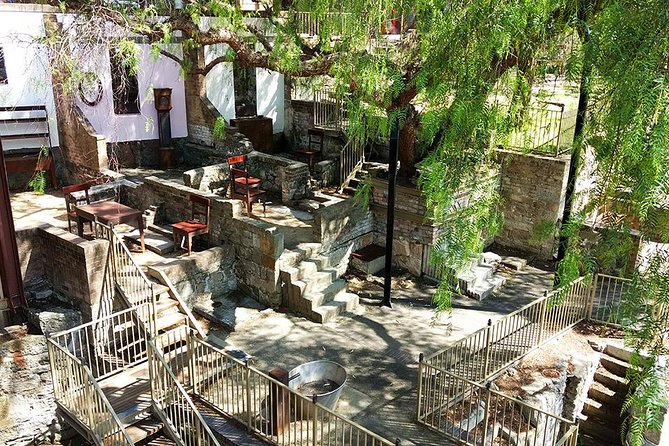
Macquarie Place Park relics include an underground Edwardian lavatory and a First Fleet anchor.
Tank Stream Fountain tells the story of Sydney’s original fresh water source hidden below your feet.
The Rocks lanes and old pubs link convict, sailor, and street-gang stories to real streets you can still walk.
Guides bring the era to life (I’m seeing names like Beck, Max, and Pete show up often) with patient answers and lots of energy.
A crime-historian walk through Sydney Cove’s gritty beginnings
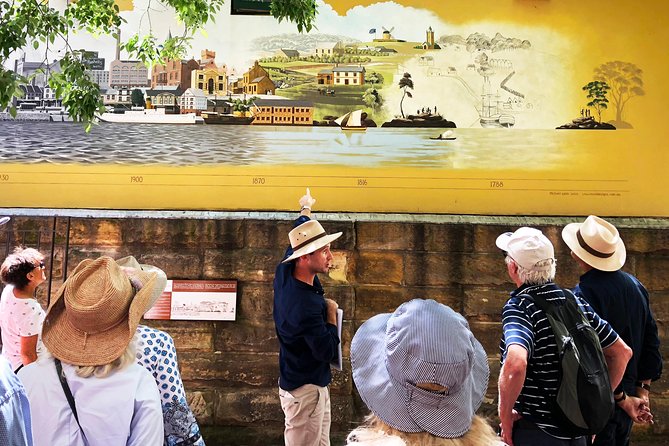
The Rocks is one of those places where it’s easy to think you already get it: cobblestones, old buildings, and that postcard harbor view. This tour flips that. Instead of only admiring the scenery, you walk in step with a crime historian who focuses on the people behind the place—convicts, sailors, and the street-smart chaos that grew around them.
The tour leans into the darker side of the early settlement: the strain of crowded living, the pull of opportunity, and how rough communities formed social rules of their own. It also connects those stories to what you can see today, so the history feels grounded, not like you’re reading a plaque and moving on.
Because you’re in a group of 15 or fewer, it works like a conversation with a very prepared teacher. People in your orbit can ask questions, and the guide can slow down when curiosity hits. That matters, because the story is packed with characters, locations, and turning points.
You can also read our reviews of more walking tours in Sydney

Starting at Customs House: how trade shaped the convict era
You meet at Customs House at Circular Quay, right in the flow of ships and movement. The guide meets you in front of the building, positioned on the right-hand side if you’re facing the entrance. That’s a nice start because you’re at the exact kind of doorstep where arrivals and departures mattered every day.
Outside, the tour takes time with the elaborate sandstone facade, framed as the gateway for people and goods arriving by ship through the 19th and 20th centuries. Then you go inside, which is where the tour earns extra value. You get to see a scale model of Sydney from above, and that bird’s-eye perspective helps you connect the harbor geography to why certain areas became important.
Even if you only have one day in Sydney, this is a strong foundation moment. Once you understand the harbor layout and the role of maritime arrivals, the rest of The Rocks becomes easier to follow. You’ll start spotting patterns: where crowds formed, why certain sites mattered, and how movement shaped neighborhood life.
If you’re the type who likes to understand context before you wander, this is a great first history stop.
Macquarie Place Park: anchors, monuments, and hidden infrastructure
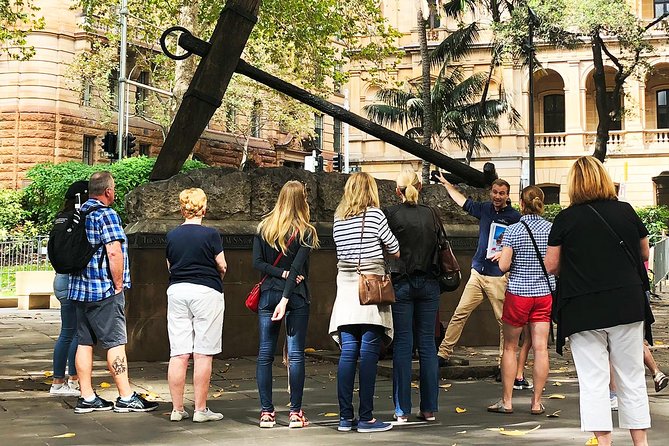
Next you head to Macquarie Place Park, where the tour slows down and points out relics that many people miss entirely. This is not just a pretty pocket of greenery. It’s a place where layers of Sydney history show up in artifacts and odd details.
A few standouts on this stop include:
- The underground Edwardian lavatory
- The First Fleet anchor
- The Obelisk of distances, Sydney’s first public monument
The anchor and the obelisk pull you toward the early era, while the Edwardian lavatory is the kind of detail that makes the past feel real. It’s a reminder that daily life, infrastructure, and practical needs shaped settlement just as much as dramatic events did.
You’ll get your bearings fast here. If you’ve ever looked at a map of Sydney and thought it’s too big to make sense, this kind of grounded stop helps your brain build a simple mental model: harbor first, trade and arrivals second, and then neighborhoods and daily life around that.
Tank Stream Fountain: why fresh water mattered more than you think
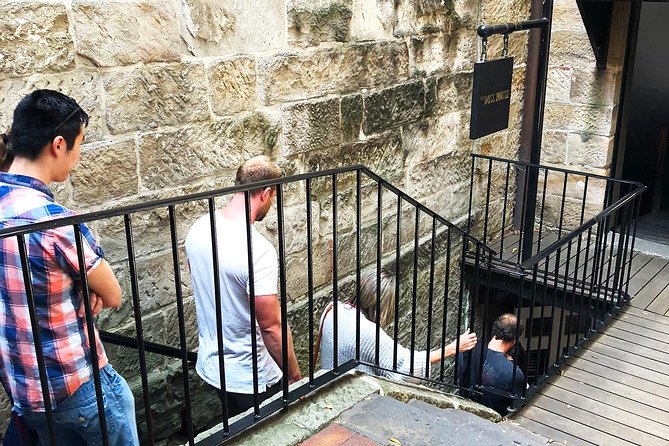
Then comes one of my favorite concepts on the route: the Tank Stream Fountain. The story centers on Sydney’s original fresh water source, hidden below where you stand now. Instead of treating water as background, the guide ties it directly to survival and settlement choices.
You’ll hear how the tank stream helped the convict colony survive. You’ll also learn that fresh water wasn’t just convenient—it was one of the reasons this cove was chosen in the first place. That’s a big shift in how you might look at an area you thought you knew.
From there, The Rocks starts to feel less like an entertainment district and more like a stubborn, practical place that had to solve real problems. The geography matters. The needs of the people mattered. That’s why this stop fits so well in the middle of the walk: it explains the physical “why” behind the human “who.”
If you enjoy walking tours that connect history to everyday needs—water, movement, work—this is the moment you’ll remember.
The Rocks lanes, cobblestones, and the stories people still walk through
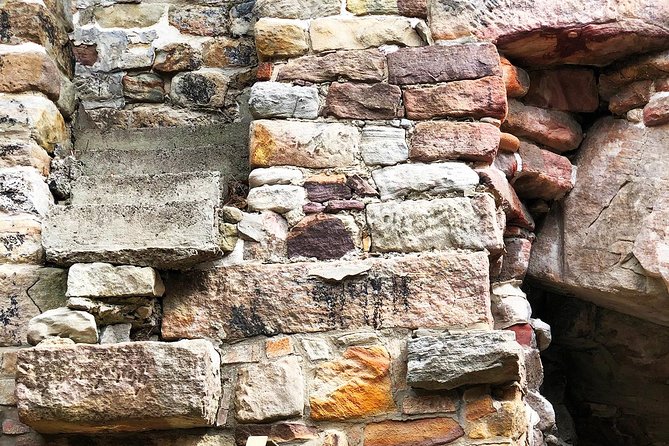
Most of the walking time lives in The Rocks, and this is where the tour’s theme shows up most clearly. You move through back alleys and along cobbled lanes, passing older pubs and houses that still give the area its character.
The guide keeps the focus on the people who made this place. Expect stories that link convicts and sailors to later street life, including street gangs. The tour doesn’t present history as neat and polished. It frames it as messy human behavior under pressure.
A few things make this section work well for your experience:
- The pace stays steady enough that you can follow the narrative.
- The guide uses visuals—maps, portraits, and historic imagery in the A3 folder—to anchor the stories to real sites.
- The group size helps you hear everything, even when questions fly.
This is also a section where the guide’s personality shows. Names like Beck and Max show up in past tours, with comments about energy and patience. In practice, that means you’re more likely to get clear answers instead of “it’s complicated” hand-waving.
One practical note: The Rocks has uneven spots and some stairs. The good news is that the route mostly follows flatter terrain, but you should expect at least a bit of stepping and a few change-of-level moments.
If it’s raining, the streets can get slippery. An umbrella is a smart idea, and sturdy shoes matter more than you might expect for a “simple” stroll.
- Blue Mountains Small-Group Tour from Sydney with Scenic World,Sydney Zoo & Ferry
★ 5.0 · 3,709 reviews






Finishing near Argyle Stores: turn the last stop into a mini itinerary
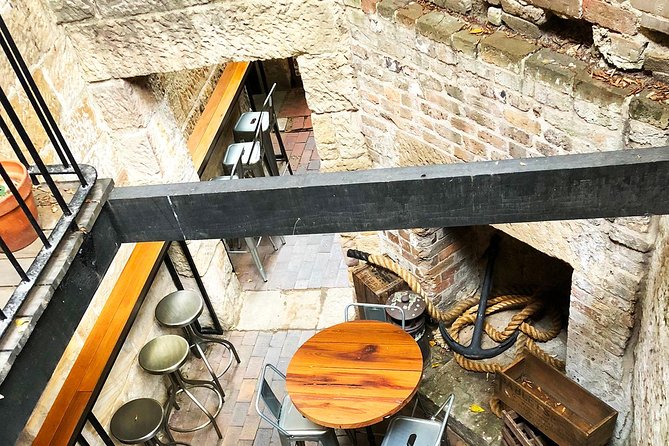
The tour ends in the heart of The Rocks near Argyle Stores, close to historic pubs, converted storehouses, shops, cafes, and beer gardens. You finish beside Endeavour Tap Rooms at 39–43 Argyle St, which is a convenient place to reset and decide what to do next.
This final stretch matters because it turns the tour from a history lecture into something useful for your actual day. Your guide is supposed to share local recommendations at the end, which helps you turn those stories into real plans—where to eat, what nearby street to follow, and what vibe fits the rest of your itinerary.
Doing this tour earlier in your trip is a smart move. Once you understand the convict-era layers and the harbor context, you’ll enjoy wandering on your own after. Even if you don’t do anything scheduled, you’ll still notice more.
Price and value: is $37.30 worth a 2.5-hour walk?
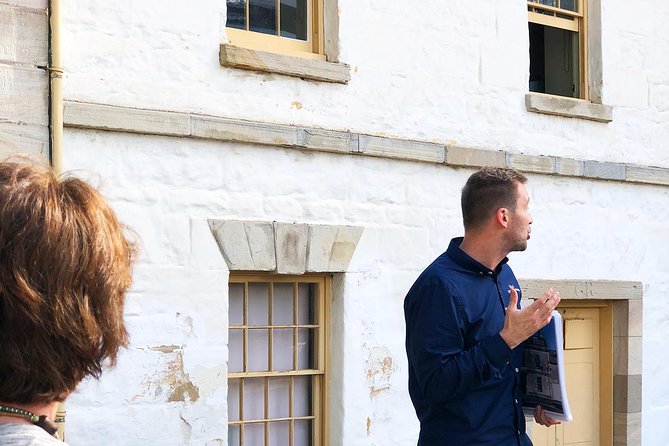
At $37.30 per person for about 2 hours 30 minutes, you’re paying for four things: a trained guide, a tight route with many sites, a couple of paid-entry style inclusions, and time spent in the “real” spaces rather than just quick stops.
Here’s what you get that most self-guided wandering doesn’t include:
- A local Sydney crime historian who connects the dots between people, crime, and place
- A custom route that hits around 20 historic sites and stories
- A tour visit inside Customs House
- A visual A3 folder with historic images, maps, and portraits
The interior Customs House visit is especially valuable. Seeing the scale model from above changes how you interpret the harbor area, and it’s hard to replicate without spending extra time (and usually extra money) later.
And the small-group cap of 15 travelers maximum reduces the common walking-tour problem where you can’t hear the guide or questions get brushed aside. That’s a real value factor, not just a comfort detail.
If you want a history overview with enough detail to feel earned, this is priced like a good local experience rather than a tourist-only product. If you only want a quick highlights loop with zero depth, you might find it a bit much for the time.
How long it feels, walking comfort, and who this suits best

On paper it’s about 2 hours 30 minutes. In real life, it can feel longer when the guide takes questions or when rain slows people down. Some people even mention that a long tour can feel stretched, so be honest with yourself about your walking tolerance.
Terrain is mostly manageable, but you should plan for some unavoidable stairs in The Rocks. That’s not a deal-breaker, but it does mean you should skip flimsy footwear and avoid heavy bags that make stairs harder.
This tour suits you if:
- You’re a first-timer who wants your bearings fast around Circular Quay and The Rocks
- You like history that includes people and conflict, not just architecture
- You enjoy hearing stories tied to specific corners, lanes, and buildings
- You want small-group interaction with time for questions
It can also work well for teens and older kids, since several families have said their kids loved the convict angle. The stories are presented as history and place, so it doesn’t feel like a museum lecture.
If you’re a hard-core scholar who already knows convict history inside out, you might find it less useful. But for most visitors, this is a practical way to understand why The Rocks looks the way it does—and why it matters.
Tips to get more out of your crime-history guide
A walking tour goes better when you help the guide help you. Here’s how I’d set yourself up:
- Come with one or two questions. Even something simple like why this area was chosen can lead to a good thread.
- Dress for weather. The tour continues in all weather, and rain can change the feel of the streets.
- Wear shoes you trust on cobblestones and wet pavement.
- Bring your curiosity, not just your photo appetite. The A3 folder and the guide’s storytelling are built for listening.
Also, if your guide is someone like Beck or Max, you can expect a lot of energy and patient answers when you ask follow-ups. Some guides even add extra ideas for nearby sights, like suggestions such as Governor’s House for a free tour. That kind of bonus makes the end of your day easier to plan.
Should you book this Convicts and The Rocks tour?
Book it if you want a small-group, crime-history themed walk that shows you the hidden reasons The Rocks developed. The mix of sites—Customs House inside, Macquarie Place relics like the First Fleet anchor, the Tank Stream story, and the lanes of The Rocks—gives you enough variety to keep your brain engaged for the full 2.5 hours.
Skip it if you hate walking, dislike stairs, or you only want quick surface-level stops with minimal narrative. Also, if you’re very sensitive to stories that may include names and images of people who are now deceased, know the tour may include that content.
For most visitors, though, this is one of the smarter ways to spend a morning or afternoon: you’ll leave with better orientation, sharper context, and streets that feel like more than scenery.
FAQ
Where do I meet the guide?
You meet at Customs House, 31 Alfred St, Sydney NSW 2000, near Circular Quay.
Where does the tour end?
The tour ends in The Rocks near Argyle Stores, by Endeavour Tap Rooms (39–43 Argyle St, The Rocks NSW 2000).
How long is the walking tour?
It’s listed as about 2 hours 30 minutes.
What’s included in the price?
Your ticket includes a local Sydney crime historian guide, about 20 historic sites and stories, a visit inside Customs House, and a visual folder with historic imagery, maps, and portraits.
Is food included?
No. Food is not included, but your guide provides local recommendations.
How big is the group?
Groups are kept small with a maximum of 15 travelers.
Does the tour run in bad weather?
Yes, the tour continues in all weather. You should dress accordingly, and an umbrella is a good idea if rain is likely.
Are there stairs on the route?
Some stairs are unavoidable in parts of The Rocks, though much of the route follows flatter terrain.
You Might Also Enjoy


More Walking Tours in Sydney

More Tours in Sydney
- Blue Mountains Small-Group Tour from Sydney with Scenic World,Sydney Zoo & Ferry
★ 5.0 · 3,709 reviews

More Tour Reviews in Sydney
- Blue Mountains Small-Group Tour from Sydney with Scenic World,Sydney Zoo & Ferry
★ 5.0 · 3,709 reviews