REVIEW · SYDNEY
Private Walangari’s Aboriginal Walking Tour in Bondi Beach
Book on Viator →Operated by Walangari Karntawarra and Diramu Dance & Didgeridoo Aboriginal Experiences · Bookable on Viator
A walk with Walangari turns Bondi into a living classroom. Led by Walangari Karntawarra, an Aboriginal elder and Bondi local, this private tour uses a didgeridoo opening, ancient rock carvings, and plant knowledge (bush foods and medicines) to explain the geological and social history of one of the world’s most famous shorelines. Two things I especially like are the calm, gentle pace along the cliffs and the chance to ask questions about the world’s oldest living culture. One drawback to plan for: it’s weather-dependent, and the route is outdoors on a downhill stretch.
This is also a smart setup for mixed groups. You can use translator or group-leader audio support if needed, and the walk can include extra participants if you’re booking a larger group. With a price set per private group (up to 15), it can feel steep if you’re traveling solo, but if you’re splitting costs with friends or family, it starts to make a lot more sense.
In This Review
- Key Things to Know Before You Go
- Bondi Seen Through an Elder’s Eyes, Not a Scripted Tour
- The Route: North Bondi to the Bondi Pavilion in About 90 Minutes
- The Didgeridoo Ceremony at the Start Sets the Tone
- Rock Carvings: What You’ll Notice Along the Way
- Bush Foods and Medicines Still Growing Here
- Ben Buckler Gun Battery and the Layered Story of Bondi
- How the Q&A and Audio Support Work in Real Life
- A Quick Note on Pace: Downhill Is Easier, Wind Is Not
- Price for a Private Group: Is $710 Worth It?
- Optional Diramu Dance and Didgeridoo: When You Want More
- Who This Tour Fits Best
- Should You Book Walangari’s Bondi Aboriginal Walking Tour?
- FAQ
- Where does the tour start?
- Where does the tour end?
- How long is the walking tour?
- Is this a private tour?
- What’s the group size limit for the standard price?
- Can the group be larger?
- What happens at the beginning of the tour?
- Will we see Aboriginal rock carvings?
- Is there support for translation?
- Is there an optional cultural performance?
- Is the tour weather-dependent?
Key Things to Know Before You Go
- Meet at North Bondi Golf Course area: you start near the cliffs at Military Rd and Blair St, then finish at the Bondi Pavilion
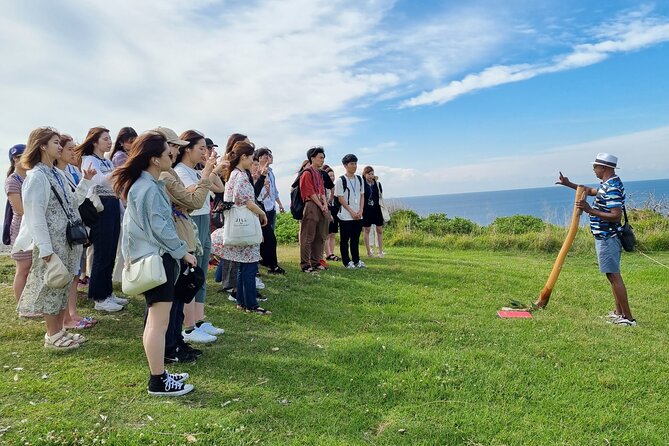
- Didgeridoo ceremony begins the walk: you’re welcomed in a traditional way before you start looking closely at the land
- Rock carvings have context: expect explanations of meanings, not just photos and guessing
- Bush foods and medicines along the route: you’ll learn what grows here and why it matters
- Q&A is part of the experience: you’re encouraged to ask questions about Aboriginal history and culture
- Optional Diramu performance afterward: you can extend the day with interactive dance and didgeridoo for an extra fee
Bondi Seen Through an Elder’s Eyes, Not a Scripted Tour
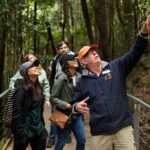
Bondi usually gets sold as scenery: cliffs, ocean views, photos, repeat. This tour gives you a different way to read the place. Walangari Karntawarra is not just a guide with slides. He’s an Aboriginal Australian elder, artist, educator, and performer, and he’s also a Bondi local. That combination matters because his stories connect the natural world to social life, learning, and memory.
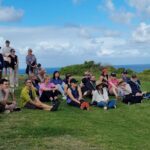
You’ll walk as a group while Walangari points out features tied to Aboriginal presence in this landscape. The tour blends what’s happening around you now—coastal forms, plants still growing—with deeper time, including how the coastline formed and changed. The result is that Bondi doesn’t feel like a single postcard. It feels like a timeline you can physically follow.
The tone is also worth noting. From the way the walk is described and how people talk about it, this doesn’t come off as a lecture. It feels like a guided conversation where you can actually ask questions, and that’s where the experience tends to click for most groups.
You can also read our reviews of more walking tours in Sydney

The Route: North Bondi to the Bondi Pavilion in About 90 Minutes
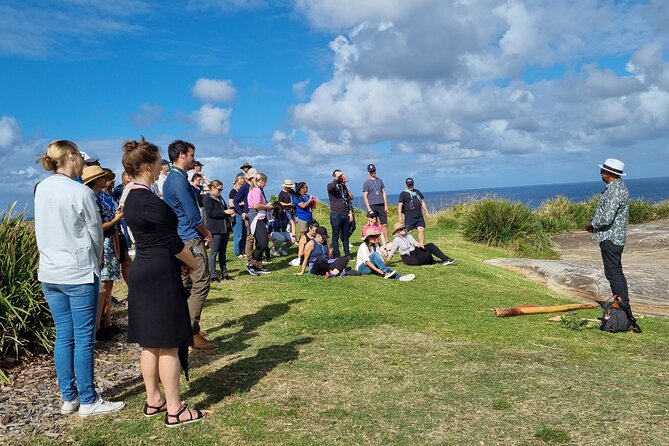
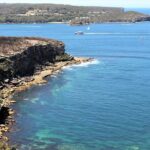
The walking portion runs about 1 hour 30 minutes. You start at the North Bondi Golf Course area, on the corner of Blair St and Military Rd, near the cliffs overlooking the Pacific Ocean. The walk ends at the Bondi Pavilion on Queen Elizabeth Dr.
That finish matters because you don’t end up stranded in the middle of nowhere. The Pavilion sits right where people tend to linger, so after the tour you can keep exploring at your own pace or grab a bite nearby. Even better: the meeting and finishing points are straightforward and easy to find on a map.
The walk is described as gentle and downhill. That’s a practical detail. A downhill route can be easier for some people who don’t want a steep climb, but it also means you’ll want sensible shoes with grip for slope and coastal wind. If you’re bringing older family members, you’re not stuck with a punishing incline—this route is built to be manageable.
The Didgeridoo Ceremony at the Start Sets the Tone
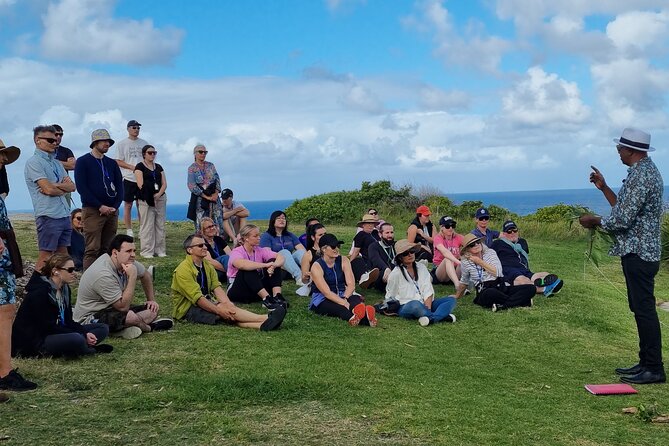
Before you cover much ground, Walangari begins the walk with a didgeridoo ceremony. This isn’t just atmosphere. It acts like an opening that signals how the walk will work: you’re not just sightseeing, you’re being welcomed to look at country with care.
The ceremony start also shifts your mindset quickly. You’re standing near the cliffs at Bondi, which is already dramatic, and then the guide introduces a deeper rhythm to the moment. That makes the rest of the tour feel grounded. You notice what you’re seeing rather than treating it like background for a photo.
If you’re curious about Aboriginal cultural practice, this is one of the clearest points where the experience becomes more than information. It’s a living element, delivered by the person leading the walk.
Rock Carvings: What You’ll Notice Along the Way

One of the main draws is the chance to see ancient Aboriginal rock carvings and to hear their meanings explained. This is a key difference between typical city walks and this one. You’re not left to wonder what you’re looking at. Walangari points to carvings and connects them to stories and knowledge.
You’ll also be walking through a landscape where the visible surface is only part of the story. Coastal places change over time due to geology, erosion, and shifting conditions. That’s why a guide who understands both the land and the cultural layer is so valuable. Instead of just pointing at art, the tour places the carvings into a bigger picture.
Keep your eyes on the details. Rock carvings can be small and easy to miss if you’re staring out at the ocean all the time. The tour’s structure helps here: Walangari pulls attention back to the ground-level features you might otherwise walk right past.
Bush Foods and Medicines Still Growing Here
Another standout element is that you’ll identify Aboriginal bush foods and medicines that are still growing along the route. That’s a practical kind of knowledge because it links culture to daily life and survival skills—how communities read the seasons, find what’s useful, and understand plants beyond their appearance.
For me, this is where the tour becomes most memorable. It’s one thing to hear that Aboriginal people knew the environment. It’s another to walk past living plants and have someone explain why they matter. Even if you don’t memorize every species, you’ll leave with a clearer way to see the land as something active, not empty.
If you’re the type who loves learning natural history, you’ll probably enjoy how the tour connects biology and cultural practice. And if you’re more interested in social history, the plant knowledge still helps. It shows relationship—how people learned, used, and respected the landscape.
You can also read our reviews of more private tours in Sydney



Ben Buckler Gun Battery and the Layered Story of Bondi
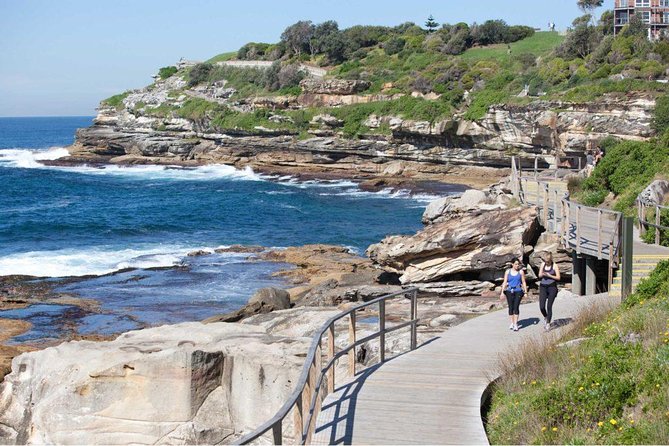
Along the walk, you’ll pass Ben Buckler Gun Battery, a heritage-listed fortified former gun emplacement. It’s named after a local bushranger who lived in a cave nearby. That detail adds another layer to the coastal story, because Bondi isn’t only Aboriginal country or only colonial history—it’s layered.
You’ll also see examples of art deco architecture. That’s a nice balance to the natural and cultural focus. It helps you understand that Bondi’s identity isn’t just the coastline. It’s also the built environment shaped over time by different communities and eras.
What makes this part of the tour valuable is how it supports the broader theme. Walangari isn’t only talking about today’s view. He’s explaining geological and social history, including how the coastline formed and changed over the ages. Hearing that while you move through a place with clear visible history helps the ideas stick.
How the Q&A and Audio Support Work in Real Life
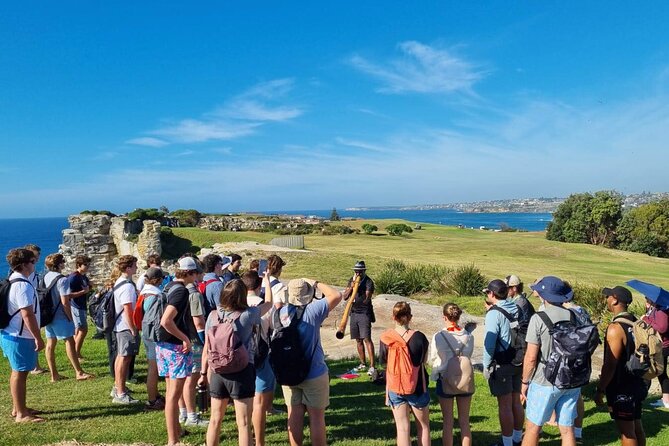
This is a private tour, so you’re not competing for attention with strangers. You can ask questions about the world’s oldest living culture, and the guide’s role as an educator comes through in how he answers.
There’s also audio support described as an audio transmitter for a translator or group leader if required. In practical terms, that means language support can be built into the experience without turning it into chaos. If you’re traveling with family who need help understanding, this kind of setup can make the difference between a tour that works for everyone and one that becomes stressful.
Group size is also worth planning for. The tour is priced for a private group up to 15. There’s mention that it can take up to 38 walkers for an additional fee. If you’re booking for a larger group, confirm how the audio and pacing will be handled so you don’t end up with people spread too far apart from the guide.
A Quick Note on Pace: Downhill Is Easier, Wind Is Not
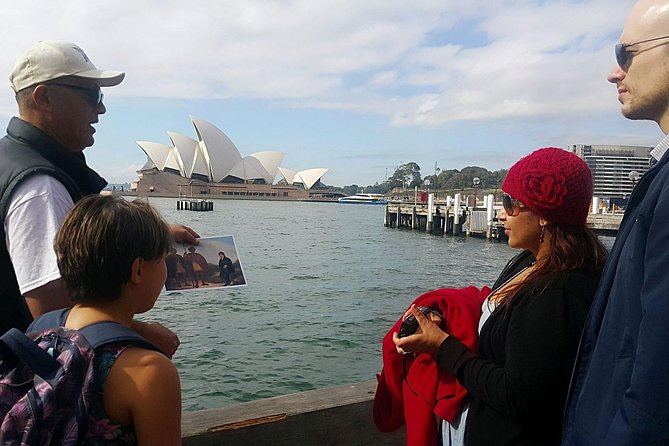
The route is described as a gentle downhill walk. That usually means less climbing, and it’s often easier on legs than a stair-heavy climb. Still, Bondi can be windy, and coastal weather changes fast.
From the way the tour is described for mixed-age groups, it seems designed so elderly parents can participate without feeling like the route is too taxing. If that’s your concern, you’ll likely appreciate the pace structure.
Bring basic comfort items: water, sun protection, and something for wind. If you’re prone to getting cold on the coast, a light layer helps. You’ll be outside the whole time, and the didgeridoo ceremony start means you may be waiting briefly before moving.
Price for a Private Group: Is $710 Worth It?
The price is $710.07 per group, for up to 15 people. That’s not cheap in total, but it’s also not priced like a per-person ticket. The math works differently.
If you’re traveling with a few people, the cost per head becomes much more reasonable because you’re paying for expert guiding and a private format, not paying for multiple separate entries. It’s also a lower-risk choice than booking something that might disappoint one person in your group. With private guiding, you’re more likely to get the Q&A time and attention that turns facts into understanding.
If you’re solo, though, this is where it can feel expensive. This is best value when you can share the group cost with friends, family, or a small club.
Also consider what you’re paying for. You’re not only paying for a walk and views. You’re paying for an elder-led explanation of deep cultural knowledge, plus live cultural components (didgeridoo ceremony at the start and an optional Diramu performance). In tours like this, the personality and depth of the guide are the product.
Optional Diramu Dance and Didgeridoo: When You Want More
There’s an option to finish with an interactive cultural performance by Diramu Aboriginal Dance and Didgeridoo, for an additional fee. If you’re excited by the didgeridoo start and want the experience to continue rather than taper off, this add-on is likely the best match for you.
Think of it as a second act. The walking part is about seeing and learning in context. The performance is more about expression—dance, music, and interaction. If you’re the type who enjoys ending with something memorable and energetic, this can turn the tour into a fuller evening or afternoon plan.
On the other hand, if you prefer a quieter experience or you have tight timing, you can keep it to the walk and then head off on your own from the Bondi Pavilion.
Who This Tour Fits Best
This tour is a good match if you want more than a scenic stop in Bondi. You’ll probably enjoy it if you care about:
- learning Aboriginal cultural knowledge in a respectful, guide-led way
- understanding the landscape through deeper time, not just modern landmarks
- asking questions and getting answers from an elder who’s also an educator
- visiting as a small group where everyone can participate and hear clearly
It can work well for mixed ages too. The route is described as gentle and downhill, and there’s explicit mention of easy support through translation audio for older parents.
If you’re traveling with someone who just wants beach time and photos, this might feel like too much “talk.” But if your group is curious, it’s exactly the kind of experience that changes how you see a famous place.
Should You Book Walangari’s Bondi Aboriginal Walking Tour?
Book it if you want Bondi with meaning. If you like your travel grounded in real people, real cultural teaching, and practical insights you can actually apply to how you look at the coastline, this is the right choice.
Don’t book it if your priority is maximum beach time and minimal walking, because this is a guided experience with time outdoors and a set route. And do check weather plans. This activity requires good weather, and the provider will offer a different date or a full refund if it has to be canceled due to poor conditions.
For the best value, team up with others in your group. Paying per private group (up to 15) makes a big difference, and it’s one of those tours where splitting the cost turns a pricey outing into a very reasonable experience.
FAQ
Where does the tour start?
The tour starts at Military Rd at Blair St in North Bondi, near the cliffs by the North Bondi Golf Course.
Where does the tour end?
The tour finishes at the Bondi Pavilion on Queen Elizabeth Dr, Bondi Beach.
How long is the walking tour?
It lasts about 1 hour 30 minutes.
Is this a private tour?
Yes. It’s a private tour, meaning only your group participates.
What’s the group size limit for the standard price?
The price is for a private group up to 15 people.
Can the group be larger?
It can take up to 38 walkers for an additional fee.
What happens at the beginning of the tour?
Each walk begins with a didgeridoo ceremony led by Walangari Karntawarra.
Will we see Aboriginal rock carvings?
Yes. You’ll see ancient Aboriginal rock carvings and learn about their meanings.
Is there support for translation?
There is an audio transmitter available for a translator or group leader if required.
Is there an optional cultural performance?
Yes. You can choose to finish with an interactive performance by Diramu Aboriginal Dance and Didgeridoo for an additional fee.
Is the tour weather-dependent?
Yes. It requires good weather. If it’s canceled due to poor weather, you’ll be offered a different date or a full refund.
You Might Also Enjoy



More Walking Tours in Sydney

More Tours in Sydney
- Blue Mountains Small-Group Tour from Sydney with Scenic World,Sydney Zoo & Ferry
★ 5.0 · 3,709 reviews



More Tour Reviews in Sydney
- Blue Mountains Small-Group Tour from Sydney with Scenic World,Sydney Zoo & Ferry
★ 5.0 · 3,709 reviews