REVIEW · SYDNEY
Sydney Queer Walking Tour
Book on Viator →Operated by Queer Sydney Walking Tour · Bookable on Viator
Sydney’s queer story sits on street corners. This 2-hour walking tour connects landmark spots to the big shifts in queer life in Australia, from what’s known about Indigenous views on diverse sexuality and gender to colonial-era circumstances and early 20th-century change. You’ll also hit the major turning point of Mardi Gras 1978, with stories that carry through protest, partying, and the HIV epidemic.
I especially like how the guide, Michael, keeps the tone lively while staying grounded in the places themselves. And I like the route choice: you move from the Law Courts area toward Darlinghurst, then finish at Taylor Square, so the history lands right where the modern culture still spills out. One possible drawback: the tour covers a lot of decades in about 2 hours, so it’s an overview more than a one-era deep dive.
In This Review
- Key highlights you’ll remember
- Getting oriented: a 2-hour route with four anchor stops
- How the guide ties Indigenous perspectives to colonial and early 1900s queer life
- Stop 1: Archibald Memorial Fountain and the idea of hidden histories
- Stop 2: Emden Gun at Whitlam Square and the 1970s gay rights era
- Stop 3: Green Park backstreets, a coffee or tea pause, and HIV-era Sydney
- Stop 4: Kinselas Hotel at Taylor Square and June 1978’s first Mardi Gras
- What you learn about the LGBTQ cultural scene, beyond parade talk
- Why the small group (max 12) changes the feel of the tour
- Price and value: what you’re paying $53.79 for
- Who should book this Sydney queer walking tour
- Should you book it?
- FAQ
- How long is the Sydney Queer Walking Tour?
- What is the price per person?
- Where do I meet the tour?
- Where does the tour end?
- How many stops are included?
- What is the maximum group size?
- Is there a coffee or tea stop?
- What’s the cancellation window for a full refund?
Key highlights you’ll remember
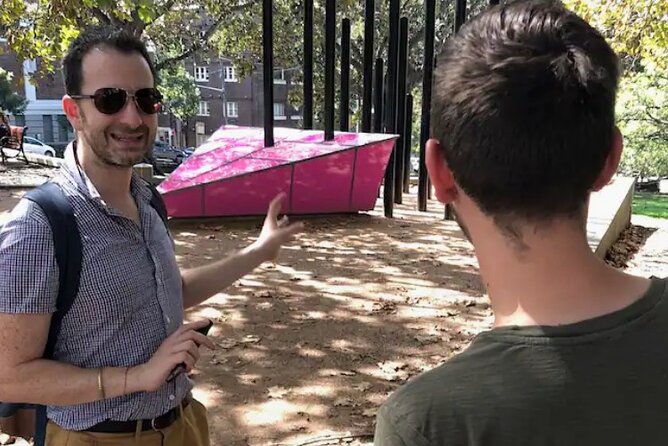
- Archibald Memorial Fountain as a starting point for hidden queer threads across decades
- Emden Gun at Whitlam Square tying the 1970s gay rights push to media attention
- Green Park in Darlinghurst, plus a built-in coffee or tea stop while the group talks HIV-era realities
- Kinselas Hotel at Taylor Square, focused on June 1978 and why it still matters today
- Small group size (max 12), which helps questions and keeps the pace human
- Mobile ticket for easy check-in on a 9:30 am start
Getting oriented: a 2-hour route with four anchor stops
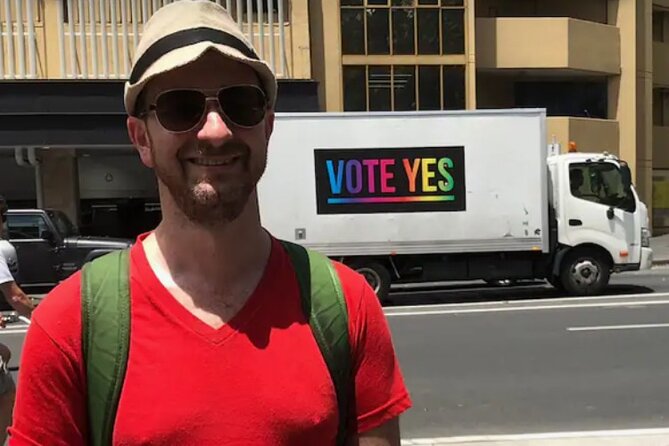
This tour is designed to be walkable and story-driven. You meet at the Law Courts Library at 184 Phillip St (9:30 am), then work your way through a sequence of specific sites: Archibald Memorial Fountain, Emden Gun at Whitlam Square, Green Park (Darlinghurst backstreets), and Kinselas Hotel near Taylor Square. It ends at Sydney Sustainable Markets on Oxford Street at the intersection with Bourke Street.
Because the format is only about two hours and the stops are spaced out with guiding time, you get a clear arc rather than scattered facts. Think of it like a guided timeline you can literally walk.
Also, the group stays small: up to 12 people. That matters. It’s easier to hear the guide, easier to ask questions, and easier to keep the mood from turning into a lecture.
You can also read our reviews of more walking tours in Sydney

How the guide ties Indigenous perspectives to colonial and early 1900s queer life
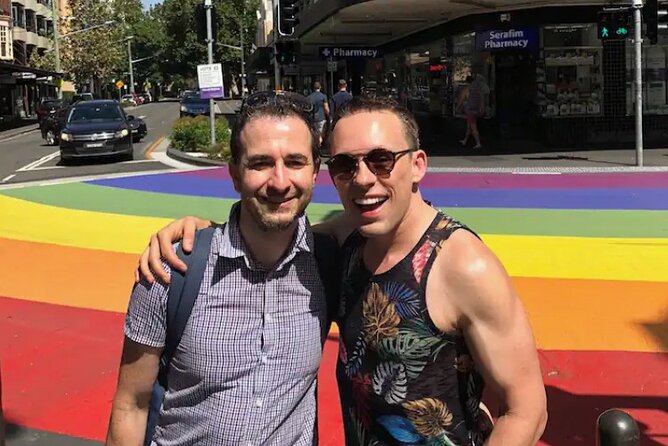
One of the tour’s strongest ideas is that it doesn’t start with modern politics and stop there. Before the 1970s reforms take center stage, the guide frames queer history as something that existed long before public activism. You’ll learn about what’s known about Indigenous Australia’s view on diverse sexual orientation and gender, and then you’ll hear how queer forebears navigated colonial-era circumstances and into the early 20th century.
That sequencing is practical for your understanding. If you’re used to thinking of queer history as starting when the media got louder, this tour changes the timeline in your head. It gives you a broader base so the later protests and cultural scenes don’t feel like they appeared from nowhere.
It’s also a reminder that queer history is often harder to find. Some of what you’ll hear is connected to places where the visible markers are minimal, which makes the walking format work well. You’re not just looking at landmarks; you’re learning how stories got ignored, covered, or only partially preserved.
Stop 1: Archibald Memorial Fountain and the idea of hidden histories
You start at Archibald Memorial Fountain. The point of beginning here is smart: it symbolizes the hidden queer histories of Sydney. It’s not just a “cool landmark to stand by.” The guide uses it to set the tone for the whole tour, then walks you through what’s known from colonial times into the 1970s.
Here’s why this works for you: fountains, statues, and public art often feel neutral when you look at them quickly. This stop nudges you to ask a better question: who is remembered publicly, and who gets left out? That mindset helps for the rest of the route, because later stops connect directly to activism and public visibility.
Practical tip for this first stop: arrive a few minutes early so you can settle in and listen without getting rushed. The stories begin right away, and the early context sets up the emotional weight of what comes later.
Stop 2: Emden Gun at Whitlam Square and the 1970s gay rights era
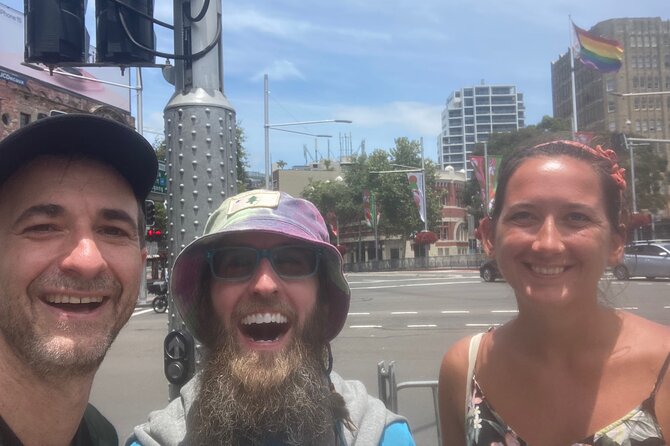
After the fountain, you head to Whitlam Square and the Emden Gun. This stop turns the volume up. The guide uses the location to explore how the 1970s marked the beginning of a gay rights era focused on fairness and equality.
What I like about this part is the emphasis on media. The tour doesn’t treat media as background noise. It frames the press and public conversation as part of what made the push for rights louder and harder to dismiss. In other words, politics and publicity are shown as connected gears, not separate worlds.
Even without needing specialized knowledge, you can follow the logic: when arguments reach mainstream attention, the culture has to react. That reaction can show up as support, backlash, or both. This stop gives you that big-picture view while staying anchored in one real, recognizable corner of the city.
If you’re someone who likes “why did this happen when it did?” explanations, this is a good moment for you. It helps you understand why the 1970s mattered so much for the next chapter.
Stop 3: Green Park backstreets, a coffee or tea pause, and HIV-era Sydney
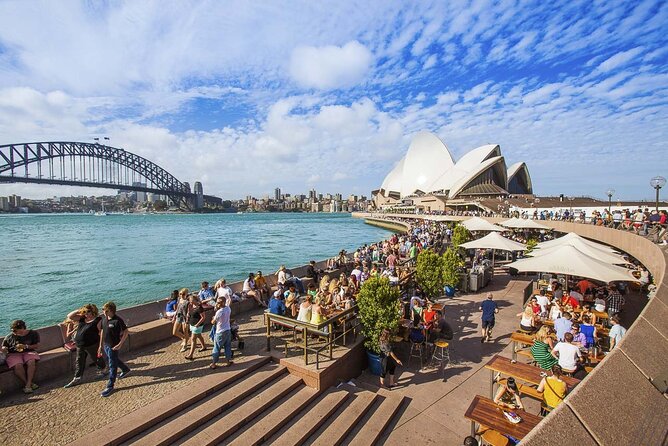
Next is Green Park in Darlinghurst, reached by winding through backstreets. The tour includes a coffee or tea stop along the way at a local café, which is a nice reset. It keeps the walk from feeling like constant momentum, and it gives you a moment to ask questions as the group naturally slows.
This stop’s theme is how Sydney handled the HIV epidemic. The guide connects the public mood with the social fallout and the community response. You’ll talk about the circumstances queer people faced during this period and how activism and daily life were tied together.
Why this section matters: it’s easy to think of the HIV epidemic as something that only belongs to headlines from history books. The tour brings it back to human scale, linking it to a place where people lived, socialized, and argued for care and dignity. You come away with a clearer sense of why later protest and community culture weren’t just about celebration. They were also about survival and rights.
One small consideration: since this part happens on foot through backstreets, comfortable shoes matter. Also, if you want coffee or tea during the stop, consider bringing a card or some cash just in case you feel like grabbing a drink.
- Blue Mountains Small-Group Tour from Sydney with Scenic World,Sydney Zoo & Ferry
★ 5.0 · 3,709 reviews


Stop 4: Kinselas Hotel at Taylor Square and June 1978’s first Mardi Gras
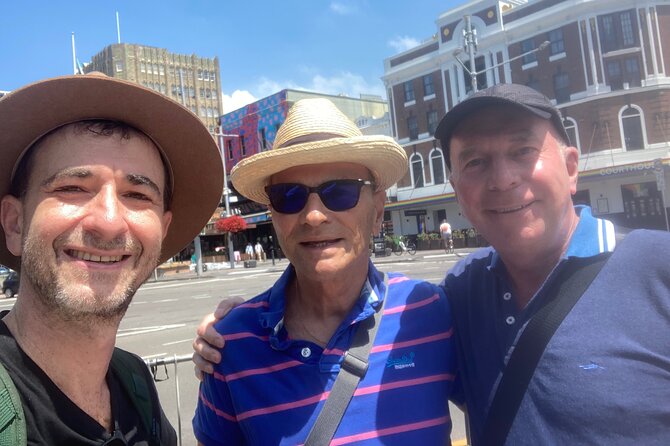
The final stop is Kinselas Hotel at Taylors Square, near the intersection of Oxford Street and Bourke Street. The focus here is June 1978 at that spot and why it remains a powerful call to Queer Sydney today.
This is the stop where the tour’s storyline clicks into place. You’ve covered earlier periods and the lead-up through the 1970s rights era. Now you land on the cultural event that became international: the first Mardi Gras and the decades of protest, partying, and ongoing work that followed.
It helps that the ending location is practical. You finish near the Sydney Sustainable Markets area, which means after the tour you’re in the right zone to keep exploring on your own. If you want to compare what you learned with what you see today, this is a good position to do it.
The Kinselas Hotel stop also gives you something more than a date and a parade reference. It frames why the event is still meaningful: it was not just a one-off spectacle. It became a recurring public statement about identity, safety, and visibility.
What you learn about the LGBTQ cultural scene, beyond parade talk
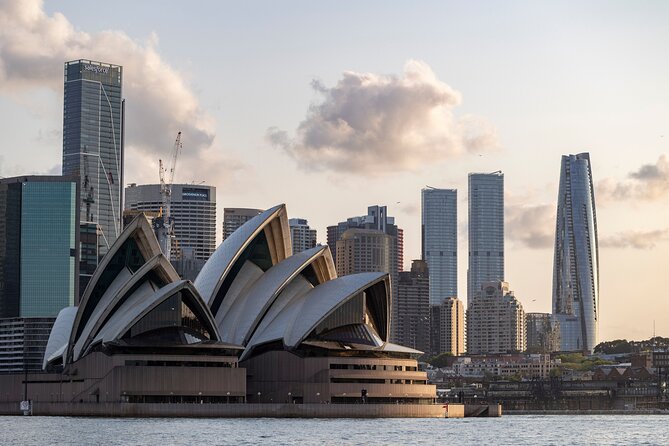
The tour’s summary mentions the internationally renowned Mardi Gras parade, and you will absolutely connect it to the wider cultural scene around it. But the best part is that the parade isn’t treated like the whole story.
You’ll also cover social upheaval and reform that burst into the mainstream from the 1970s onwards, plus how the queer community dealt with the HIV epidemic. That combination matters because it explains why celebrations and activism often lived side by side. In Sydney, you can’t separate the parties from the push for rights. This tour helps you see that link clearly.
Another thing I appreciated: the guide keeps the focus on circumstances and stories of queer forebears, not just on slogans. Even when the topic is heavy, it’s framed through real places and real moments, which makes it easier to keep listening.
Why the small group (max 12) changes the feel of the tour
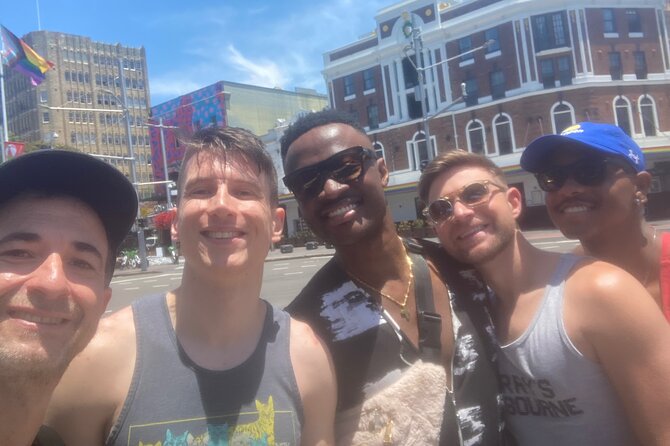
A maximum of 12 people might sound like a minor detail, but it affects your actual experience. In a smaller group, you’re less likely to get lost in the back. The guide can keep better eye contact, and the pace feels less frantic.
It also makes the tour more personal. When the stories shift from one era to another, people often have the same kinds of questions. With a small group, you’re more likely to get those answers on the spot instead of waiting until the end.
Add in the fact that you’re using a mobile ticket and starting at 9:30 am, and the whole thing stays smooth and low-stress. You’re not stuck sorting paper or wandering around trying to figure out where to go.
Price and value: what you’re paying $53.79 for
At $53.79 per person, this tour sits in a mid-range spot for a guided walking experience. The value comes from three places:
- It’s time-efficient: about two hours gets you four meaningful stops and a long storyline that spans decades.
- It’s place-based: you’re not just learning dates; you’re learning at actual sites tied to queer life and queer activism.
- It’s small-group: up to 12 people makes the guide’s storytelling easier to follow, especially during the more sensitive chapters.
Also, the listed stops show admission ticket free. You’re paying for the guided interpretation and storytelling, not for entry fees into paid attractions at each location. For many people, that makes the cost feel fair.
If you’re the kind of traveler who likes context more than checklists, you’ll likely feel this is a strong deal.
Who should book this Sydney queer walking tour
I think this tour is a great match if you want to understand Sydney’s queer history without getting buried in dense reading. You’ll get a clear outline: Indigenous perspectives and early queer stories, then colonial and early 1900s circumstances, then the 1970s rights push, and finally HIV-era realities and the meaning of Mardi Gras beginning in 1978.
It also suits you if you enjoy a guided walk with built-in pacing. The coffee or tea stop helps, and the stop-by-stop structure keeps the history grounded.
If you’re coming mainly for club culture and nightlife, you can still enjoy it, but you’ll get much more out of it if you’re open to history and social change. This tour is about understanding how the city’s queer identity formed and why it keeps echoing today.
Should you book it?
Yes, I’d book it if you want a guided, human-scale way to learn queer Sydney from street-level places. The small group, the focused four-stop route, and the way the guide connects multiple eras to real locations make it worth the time.
Skip it only if you’re hunting for a super detailed single-topic workshop or you prefer entertainment-style experiences over thoughtful history. At about two hours, you’ll get a strong overview and direction, not a book-length explanation.
FAQ
How long is the Sydney Queer Walking Tour?
It runs for about 2 hours.
What is the price per person?
The price is $53.79 per person.
Where do I meet the tour?
You start at Law Courts Library, 184 Phillip St, Sydney NSW 2000.
Where does the tour end?
It ends at Sydney Sustainable Markets, Taylor Square on Oxford Street at the intersection with Bourke Street, Darlinghurst NSW 2010.
How many stops are included?
There are 4 stops: Archibald Memorial Fountain, Emden Gun (Whitlam Square), Green Park, and Kinselas Hotel.
What is the maximum group size?
The tour has a maximum of 12 travelers.
Is there a coffee or tea stop?
Yes. There’s a coffee or tea stop along the way at a local café.
What’s the cancellation window for a full refund?
You can cancel up to 24 hours in advance for a full refund.
You Might Also Enjoy



More Walking Tours in Sydney
More Tours in Sydney
- Blue Mountains Small-Group Tour from Sydney with Scenic World,Sydney Zoo & Ferry
★ 5.0 · 3,709 reviews
More Tour Reviews in Sydney
- Blue Mountains Small-Group Tour from Sydney with Scenic World,Sydney Zoo & Ferry
★ 5.0 · 3,709 reviews