REVIEW · SYDNEY
Historical True Crime Walking Tour of East Sydney
Book on Viator →Operated by Murders Most Foul · Bookable on Viator
Hyde Park meets true crime. This 2-hour East Sydney walking tour turns everyday streets and parks into a living map of crime cases, convict-era punishment, and gangland lore, all while you also get a solid look at Darlinghurst’s Victorian and Edwardian facades. I love how the route starts from an easy meeting point near Museum and ends in the middle of the action at Kinselas Hotel on Taylor Square.
I also love the human side of it: the guide, Elliot, keeps the pace engaging and ties the murders and street crimes to the bigger social picture, from convict years through the 1960s.
The main drawback is the tone. This is a true-crime tour, with stories involving serious violence, prostitution, and drug dealers, so it’s not the place for a purely light, family-style stroll.
In This Review
- Key Points I’d Use to Plan Your Day
- Why East Sydney Works So Well for True Crime
- Price and Time: What $24 Gets You (and What It Means)
- Start at Museum Sydney and End at Taylor Square
- Hyde Park: ANZAC Memorial, Pond Views, and a 1920s Cold Case
- Darlinghurst’s Old Streets: Where Crimes, Slums, and Policing Intersect
- Parkland Killer, Mutilator Murders, and the Story of Razorhurst
- The Architecture Factor: Victorian and Edwardian as a Crime Clue
- Group Size, Listening Comfort, and How to Prepare
- Who This Tour Suits Best
- Should You Book This East Sydney True-Crime Walk?
- FAQ
- Where does the tour start and end?
- What time does the tour begin?
- How long is the walking tour?
- How much does the tour cost?
- Is the tour ticket digital or printed?
- How many people are on the tour?
- How far do you have to walk?
- Is the tour wheelchair-friendly or focused on accessibility?
- Are the entrances free at the stops?
- What if the weather is bad?
- What is the cancellation window?
- FAQ
- Where does the tour start and end?
- What time does the tour begin?
- How long does the tour take?
- What does it cost?
- Do I need a physical ticket?
- How big is the group?
- What’s the walking like?
- What should I know about fitness level?
- Is it near public transportation?
- What are the Hyde Park highlights?
Key Points I’d Use to Plan Your Day
- Meet near Museum, finish at Kinselas so you can plug it into a normal Sydney day without fuss
- Hyde Park + Darlinghurst on foot gives you contrasting scenery in a compact route
- Stop-by-stop crime storytelling ranges from the 1920s to the 1960s and even the convict-built era
- Elliot’s storytelling focus brings both case details and the surrounding social context
- Small group size (max 25) keeps it friendly and easier to hear the guide
- Not an all-day slog: even though it’s walking, you’re not covering huge distances
Why East Sydney Works So Well for True Crime
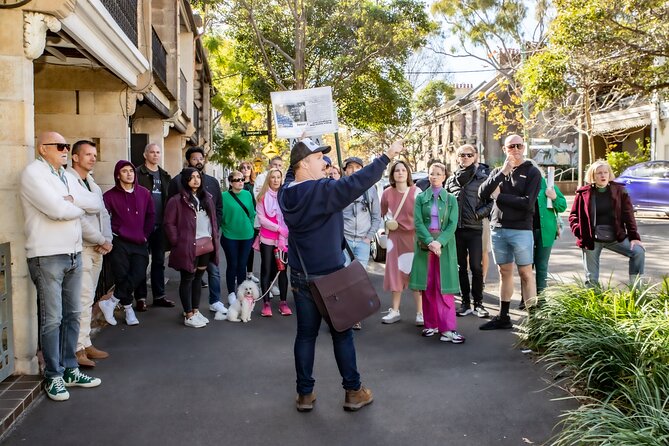
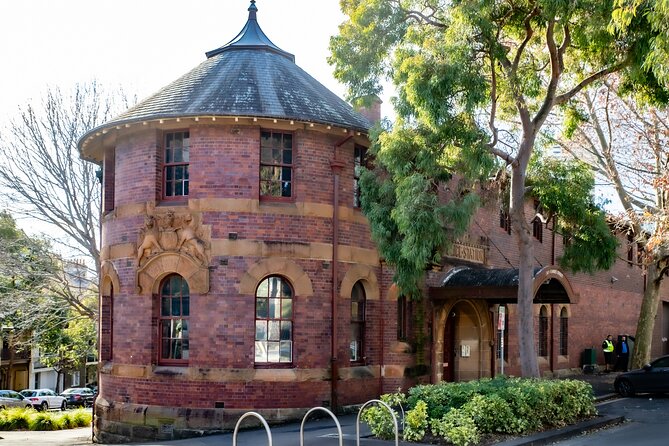
East Sydney is where you can still read the city’s past on the street level. Hyde Park sits like a formal starting line, then you slide into Darlinghurst’s older grid of laneways and streets. The architecture alone helps. You see Victorian and Edwardian buildings that make the area feel like a real stage set, not a theme park.
The big reason this tour feels different from a generic “dark history” walk is that it doesn’t treat crime as random shock value. The stories are placed into time periods you can actually picture: convict-built institutions, later slums and gangland years, and then more modern cases like the Parkland Killer and the mutilator murders of the 1960s. You end up understanding how the city’s growth, policing, and social conditions shaped what happened there.
If you like crime details but also care about context, this is the sweet spot. The tour’s structure is built to keep you moving while giving enough stop-time for the guide to explain why these places mattered.
You can also read our reviews of more walking tours in Sydney

Price and Time: What $24 Gets You (and What It Means)
At $24 for around 2 hours, this is priced like a casual activity but delivered like an actual guided experience. You’re paying for two things: a human guide to connect the dots, and a route that links specific locations to specific stories.
That time window matters. In a big city, true crime can turn into “museum fatigue” fast. Here, you get enough walking to see the streets in context, but you’re done while you still have energy for food and sunset plans.
Also, the tour includes free admission ticket access for what you visit at Hyde Park. You’re not paying extra for entry fees to get the key experiences.
Start at Museum Sydney and End at Taylor Square
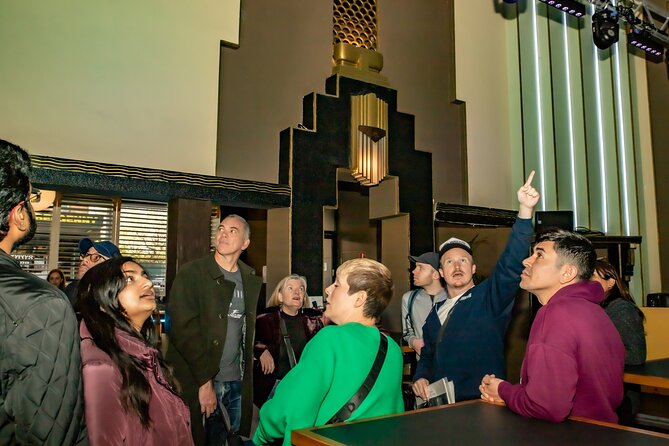
The meeting point is at Museum Sydney NSW 2000, with a 11:00 am start. I like this because you can line it up with other common Sydney plans that run around the CBD transit grid. It’s also meant to be easy to locate, which sounds basic, but it saves stress when you’re arriving in a new city.
The finish at Kinselas Hotel, 383 Bourke St, Darlinghurst NSW 2010 is clever because it puts you right where the neighborhood keeps breathing. Kinselas is a 1930s funeral parlour that’s now a bar, and it sits on Taylor Square, which you’ll recognize as a well-known backdrop for Sydney’s LGBT Mardi Gras.
In practical terms, it means you don’t end up miles away from everything after the tour. You finish in a place that works for drinks, snacks, and wandering a bit longer if you want to.
Hyde Park: ANZAC Memorial, Pond Views, and a 1920s Cold Case
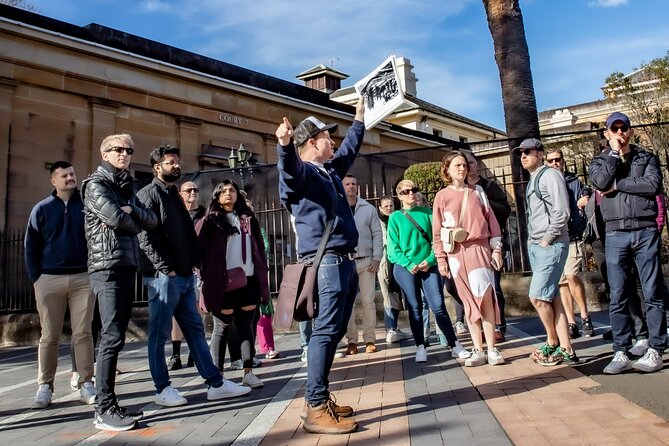
You start with Hyde Park, and the stop is more than a quick photo break. It’s where the tour gives you context for how this part of Sydney functioned before the later criminal reputation of Darlinghurst took over.
Here’s what you’ll notice in the time you spend:
- the ANZAC Memorial and the pond area
- a cold case murder story dating to the 1920s
- the fact that the park saw the first Australia vs England cricket match in 1830
- the reminder that Aboriginal people used Hyde Park before colonization
This mix of topics is useful. It prevents the tour from becoming one-note sensationalism. Hyde Park becomes a baseline: a public space with layers, including sport, memorial culture, and deep Indigenous history, before the guide shifts toward crime narratives tied to later decades.
What to watch for: Hyde Park is open air. If the weather is uncomfortable, you’ll feel it more than on a museum tour. Bring what you’d bring for any CBD outdoor walk: water, sun protection, and something light for breeze.
Darlinghurst’s Old Streets: Where Crimes, Slums, and Policing Intersect
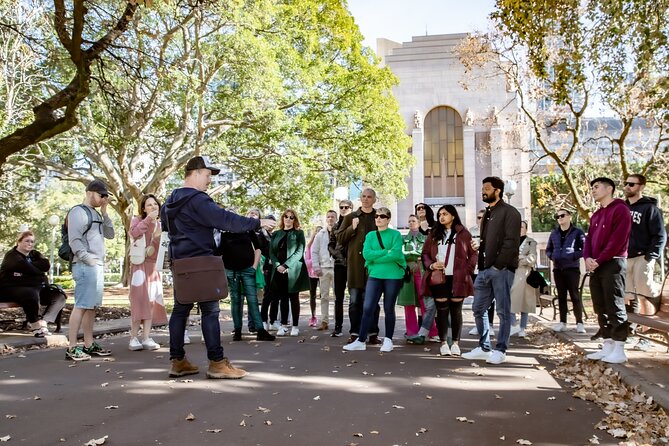
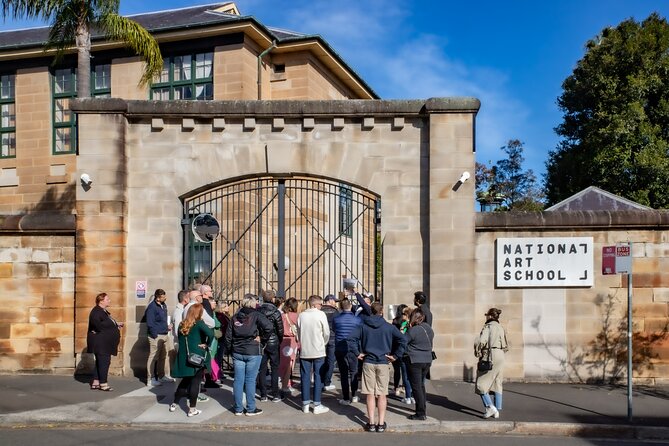
After Hyde Park, you move into old Darlinghurst, also called East Sydney. This is where the tour focuses for the remainder of the walk, using laneways and street corners to investigate historical crime scenes from 1860 to 1970.
This is also where the guide frames why Darlinghurst earned a reputation as one of the most dangerous suburbs in Australia between 1890 and 1960. That reputation wasn’t just about one type of person or one type of crime. It was slum conditions, gang conflicts, and a world where certain kinds of illegal activity were able to take root.
You’ll visit several key sites:
- the old Sydney gaol, built by convicts in 1841, and learn about the inmates and the hangmen
- the old Police Station and Courthouse that ties policing and prosecution to the street-level reality of the area
- a finish at Kinselas Hotel, whose 1930s funeral parlour past adds extra weight to the ending
A note on pace: this is a walking tour, but it’s designed to be manageable. I like that the distances aren’t treated like a punishment. You get to keep moving without turning the outing into a fitness test.
You can also read our reviews of more historical tours in Sydney

Parkland Killer, Mutilator Murders, and the Story of Razorhurst
Some true-crime tours name-drop cases and stop there. This one uses cases to anchor the neighborhood story across decades.
You can expect the guide to bring up major 20th-century threads like:
- the Parkland Killer
- the mutilator murders of the 1960s
- the area once known as Razorhurst, tied to gang fights
Why I think that matters: it keeps you from imagining the past like a different planet. Crime in Sydney didn’t just happen in one era and vanish. The tour paints a continuity of fear, policing, and underground life as the city changed around it.
Also, the guide Elliot doesn’t just rattle off names. The tour includes sociological context, meaning you’re not only hearing what crimes happened, but what conditions helped shape how people lived and how systems responded.
If you’re someone who likes to connect history to human behavior, you’ll probably find the storytelling hits harder here than it does on tours that focus purely on plot.
The Architecture Factor: Victorian and Edwardian as a Crime Clue
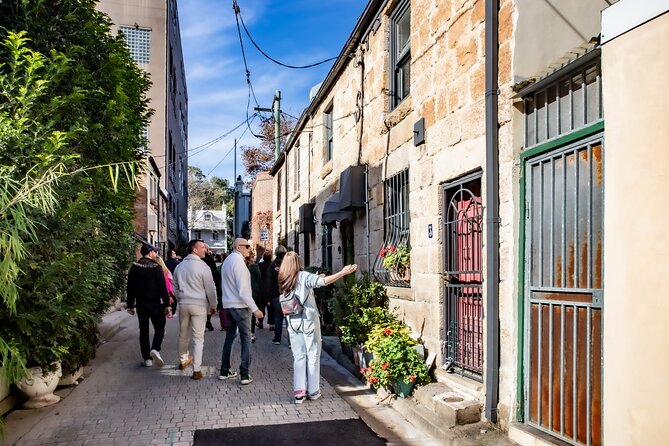
One reason I’d recommend this even if you’re not a die-hard true-crime fan is the architecture. Darlinghurst’s Victorian and Edwardian buildings turn the walk into something you can visually follow.
When a guide points out a historical site, you can look at the street and immediately understand scale and function. You get a sense of how places like gaols, courts, and older institutions sat within the same neighborhood that also held informal economies and street life.
It’s not just a backdrop. The buildings help you feel what it might have been like to pass these locations day after day.
Group Size, Listening Comfort, and How to Prepare
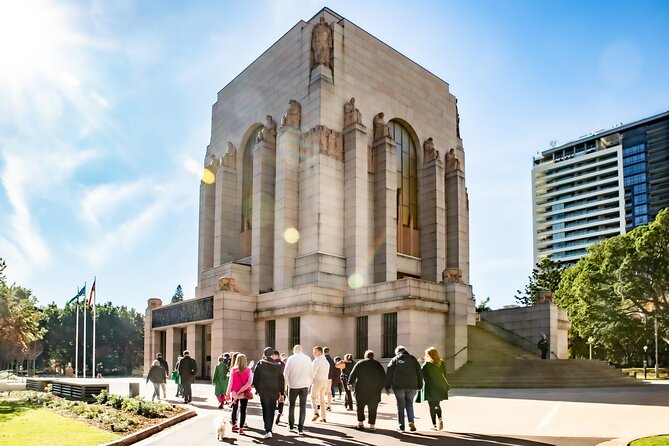
The tour caps at 25 travelers, which matters more than most people realize. It tends to keep the group from getting stretched out so you can actually hear the guide at every stop.
The experience also lists moderate physical fitness as the expectation. Based on the way the tour is described, you should not expect a long, punishing slog. It’s a city walk: steady enough to see places, light enough that you can still function afterward.
What I suggest you bring:
- comfortable shoes you don’t mind for uneven pavement
- a refillable water bottle
- a light rain layer if the forecast looks iffy
And one more practical point: if you’re sensitive to graphic or grim material, this isn’t a “choose-your-own-adventure” tour. The topic is dark, and the guide’s job is to explain it clearly.
Who This Tour Suits Best
This is a strong match for:
- people who like true crime but want place and context, not just sensational details
- history-minded travelers who enjoy convict-era institutions and the evolution of policing
- visitors who want a compact walk that still feels like a full guided experience
It’s less ideal if you want a purely scenic sightseeing loop or if you’re uncomfortable with stories involving violence, exploitation, and drug dealing.
Should You Book This East Sydney True-Crime Walk?
Yes, if you’re excited by the idea of turning Hyde Park and Darlinghurst into a timeline, and you want a guide who can connect crime stories to how the neighborhood actually worked. The value is excellent for $24, the route is designed for a manageable two-hour window, and the ending at Kinselas Hotel makes it easy to continue your evening in a meaningful location.
Skip it only if the subject matter will spoil your mood. Otherwise, you’re getting a tour that pairs Victorian and Edwardian streets with cases that range from the 1920s to the 1960s, plus the convict-built structure of the old gaol that anchors the whole story in real bricks and real streets.
FAQ
Where does the tour start and end?
The tour starts at Museum Sydney NSW 2000 and ends at Kinselas Hotel, 383 Bourke St, Darlinghurst NSW 2010.
What time does the tour begin?
The start time listed is 11:00 am.
How long is the walking tour?
It runs for about 2 hours.
How much does the tour cost?
The price is $24.
Is the tour ticket digital or printed?
You use a mobile ticket.
How many people are on the tour?
The group has a maximum of 25 travelers.
How far do you have to walk?
It’s a walking tour, but the route is described as not involving terribly long distances.
Is the tour wheelchair-friendly or focused on accessibility?
The tour notes that travelers should have a moderate physical fitness level. Service animals are allowed.
Are the entrances free at the stops?
The tour includes stops with admission ticket free (including Hyde Park).
What if the weather is bad?
The experience requires good weather. If it’s canceled due to poor weather, you’ll be offered a different date or a full refund.
What is the cancellation window?
Free cancellation is available up to 24 hours in advance of the experience for a full refund. If you cancel less than 24 hours before the start time, the amount paid will not be refunded.
FAQ
Where does the tour start and end?
The tour starts at Museum Sydney NSW 2000 and ends at Kinselas Hotel, 383 Bourke St, Darlinghurst NSW 2010.
What time does the tour begin?
The tour starts at 11:00 am.
How long does the tour take?
The duration is about 2 hours.
What does it cost?
It costs $24.
Do I need a physical ticket?
No, it uses a mobile ticket.
How big is the group?
The tour maximum is 25 travelers.
What’s the walking like?
It’s a walking tour, but it’s described as not involving terribly far walking.
What should I know about fitness level?
You should have a moderate physical fitness level.
Is it near public transportation?
Yes, it’s near public transportation.
What are the Hyde Park highlights?
You’ll see the ANZAC Memorial and pond area, hear a 1920s cold case murder story, learn about the first Australia vs England cricket match in 1830, and hear how Aboriginal people used Hyde Park before colonization.
You Might Also Enjoy

More Walking Tours in Sydney
More Tours in Sydney
- Blue Mountains Small-Group Tour from Sydney with Scenic World,Sydney Zoo & Ferry
★ 5.0 · 3,709 reviews

More Tour Reviews in Sydney
- Blue Mountains Small-Group Tour from Sydney with Scenic World,Sydney Zoo & Ferry
★ 5.0 · 3,709 reviews